


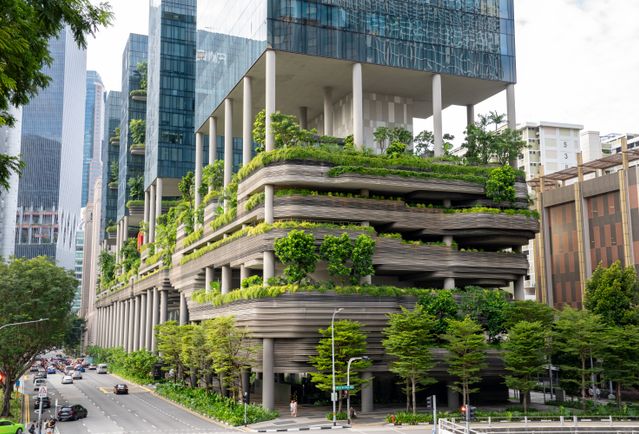
Sustainable building practices are all the rage nowadays with more businesses looking to capitalise on eco-friendly additions that will give them the most longevity. This is becoming essential with modern builds, as many cities around the world are looking to achieve Net Zero by 2050. This means that they’ll need to design and build infrastructure that incorporates sustainable materials, eco-conscious technology and less waste.
In this guide, we will explore the most common sustainable building practices of 2026, helping you to potentially plan your own eco-friendly building. Continue reading to learn more.
Most Common Sustainable Building Practices
Zero-Emission Materials
The materials used in builds makes a huge difference to how sustainable it is, so it’s important to always choose materials that are zero-emissions to lower your carbon footprint. Low-carbon concrete is great for this, with geopolymer and calcined clay cement being used in many new builds to meet the sustainability requirements of the area it’s being built. This will reduce carbon footprints without sacrificing structural integrity, as you’ll still have a strong base to work on.
Plant-based materials have also become a viable choice and more mainstream in modern construction. It helps to naturally regulate indoor temperature while acting as carbon-negative wall materials. These materials are regenerative, meaning the plants can be regrown and then used again to remake the material.
Recycled steel and wood products should be used throughout the build too, as these can actively lower the demand for natural resources.
Mass Timber Construction
Engineered wood products like cross-laminated timber (CLT) beams are replacing traditional carbon-heavy steel and concrete for mid-rise structures. CLT is up to five times lighter than concrete, yet it’s still very strong in structure and load-bearing capacity. This allows builders to create taller buildings while exerting less overall weight on the foundation.
Responsibly managed timber sequesters carbon over the lifespan of the building. As trees grow, they absorb carbon and store it in their fibers. This carbon remains locked inside the wood for decades or centuries, provided the structure is maintained.
Eco-Glazing
Eco-glazing refers to energy-efficient window solutions designed to reduce heat loss, lower energy bills and minimise carbon footprints. This includes highly efficient double or triple glazing that attaches clear acrylic panels to existing single-pane windows to trap a thermal air barrier. It traps an insulating pocket of still air between the original glass and the new panel, which prevents heat transfer and eliminates window condensation.
Implementing this has been an ongoing thing for years now and every new build will have eco-glazing. You’ll never see single pane windows installed onto buildings and you’ll only likely find them on old or abandoned properties.
Passive Principles
Passive solar design uses building orientation, thermal massing and natural ventilation can all be used to minimise mechanical heating and cooling. This approach regulates indoor temperatures naturally, reducing overall operational energy consumption. Solar panels are now obligatory on all new buildings in the UK, as they hope to achieve Net Zero.
Positioning a building to maximise natural elements like the sun for winter heating and prevailing winds for cooling is being fully capitalised on too. In the Northern Hemisphere, this usually means aligning the long axis of the building on an east-west line and facing primary living spaces toward the equator.
Renewable Energy and Storage
Integrating battery storage systems into new builds maximises self-consumption of solar energy, lowers carbon footprints to meet stringent Standard Assessment Procedure scores. This grants access to smart tariffs, which are becoming essential in modern builds. Battery storage coupled with solar PV directly improves your home’s energy performance rating, helping developers meet strict Part L building regulations.
Retrofitting batteries is also significantly more expensive than installing them during the primary construction phase, where cabling and utility spaces are planned from the ground up.
Maximising Air Source Heat Pumps
To maximise your air source heat pump’s efficiency, run it continuously at a low flow temperature rather than switching it on and off. Pair this steady operation with weather compensation settings, clear outdoor airflow pathways and time-of-use electricity tariffs to significantly lower running costs. These practices might not seem like a lot, but for buildings, they can save a lot of money.
Using a smart tariff like Octopus Cosy or EDF Heat Pump also lets you shift hot water generation to cheaper overnight or mid-afternoon off-peak windows
Smart Energy Management Systems (EMS)
An EMS is an automated control platform that monitors and analyses energy production, storage and consumption. You can then actively optimise all of these to give you a more eco-friendly build. This allows you to use AI analytics, IoT sensors and connected devices to better balance power flows in real time.
For buildings, you can automatically regulate commercial HVAC, lighting and security based on real-time room occupancy, natural sunlight and grid demand. This means you are only using energy when it’s needed, so nothing is wasted.
Circular Design
Extracting virgin raw materials and manufacturing new goods accounts for a massive majority of global carbon emissions. You can circulate existing materials, so industries can drastically reduce carbon outputs, conserve water and stop the accumulation of landfill waste. Some real world examples of this include:
- Electronics: Brands like Fairphone manufacture modular smartphones with screws instead of glue, allowing users to easily swap out batteries or broken screens.
- Apparel: Companies such as Patagonia prioritise recycled fabrics and offer take-back and repair programs to extend the usable lifespan of their garments.
- Construction: Organisations are beginning to view buildings as material banks, focusing on design for disassembly so structural elements can be reused in future projects
Water Conservation
Water is very effective at making a build more sustainable. Buildings use large-scale recycled-water networks and rainwater harvesting systems to offset local water stress, which means they aren’t wasting anything. These smart systems supply water for both urban green spaces and daily commuters, leading to a better environment.
Producing ultrapure water in sustainable builds, such as green-certified laboratories and green hydrogen plants requires balancing strict purity requirements with extreme resource efficiency. Xylem’s ultrapure water is well-known for being environmentally friendly.
Net-Zero Retrofits
Net-zero retrofits upgrade existing buildings to achieve less carbon emissions. This process involves improving building insulation, maximising energy efficiency and switching to renewable energy sources. Fabric-first upgrades are now very popular, such as wall insulation and triple glazing. This minimises energy demand before installing heat pumps or solar panels.
To reach Net-Zero, it needs to be a joint effort between all construction companies to become more eco-friendly with their builds. If just a few of them aren’t doing this, it can be difficult for cities to achieve these goals.


