


The logistics industry is constantly expanding with more materials and products than ever that need shipping from one location to another. With this growth, there has been new technology that has entered the industry that has improved the transportation of goods. From smart robotics to electric vehicle charging stations, there’s many types of technology that have taken the logistics industry by storm in the past decade.
This guide will explore the new transport technology that every logistics business should be using in 2026 to streamline their operations and deliver goods more effectively. Continue reading to learn more about these new industry additions.
New Transport Technology
Artificial Intelligence
Companies can now analyse data using AI to accurately forecast demand and reduce inventory waste, which will both improve service levels and give them a more cost-effective solution to transporting goods. Dynamic route optimisation tools can also use AI to process real-time variables, such as traffic patterns and weather conditions, to ensure the most efficient paths are taken. This reduces fuel consumption and carbon emissions.
Complementing these backend improvements, AI chatbots and virtual assistants provide constant support by offering 24/7 tracking updates and immediate answers to customer enquiries or any questions they have about product deliveries.
Internet of Things (IoT)
The integration of the Internet of Things and 5G technology provides real-time visibility and control across the entire supply chain by connecting vehicles directly to cargo systems. Through advanced sensors, companies can monitor the precise location and environmental conditions, which is good for maintaining the integrity of cold chain logistics.
These IoT sensors are capable of detecting potential mechanical issues in vehicles before they lead to costly breakdowns to significantly reduce operational downtime. This entire ecosystem is powered by 5G integration, which provides the low latency and high speed data transmission necessary for enhanced tracking.
Delivery Robots
The final part of the delivery process is usually what’s most expensive for logistics companies, so finding a solution to cut down on transport costs can be very beneficial. High-performance drones can now carry payloads of up to 40kg and can travel over 16km, which makes them very handy for the last part of a delivery. While they’re not widely used currently, they are constantly considered to be the future of parcel deliveries across the globe.
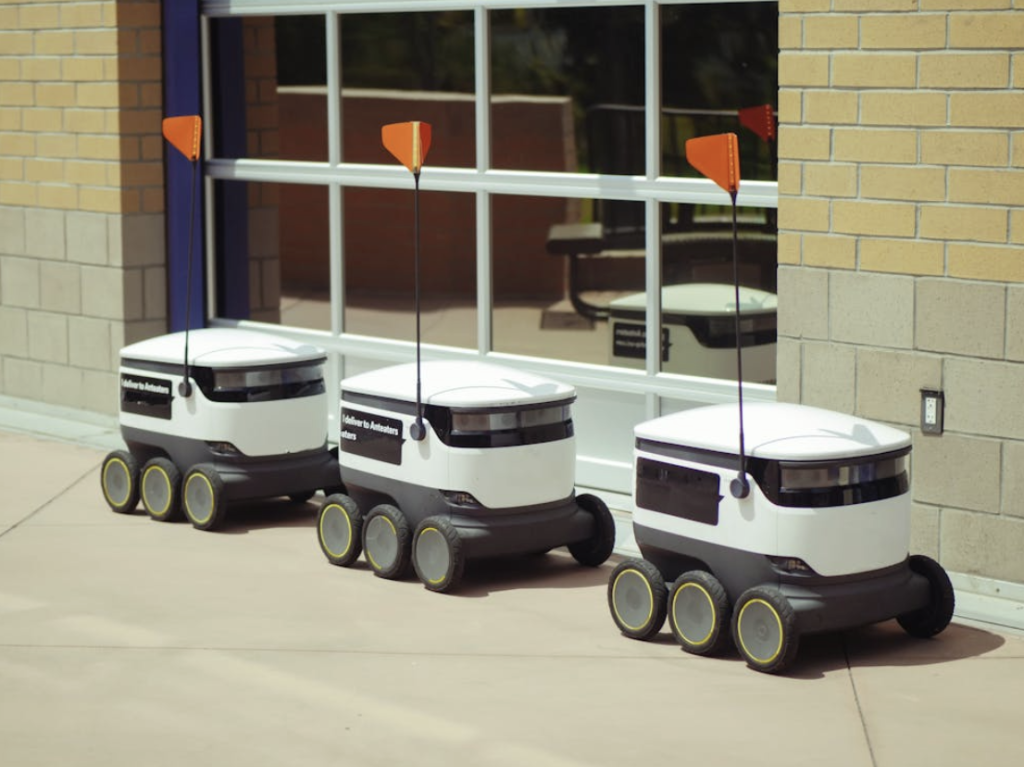
You might have also seen small robots that deliver goods in populated urban areas, such as grocery shopping or parcel delivery. They map out the route using smart technology and use AI-driven obstacle avoidance to get to their delivery location with ease. These robots require minimal input from humans, making the entire process more streamlined.
Cloud-Based Transportation Management Systems
Cloud-based Transportation Management Systems allow logistic businesses to execute transport operations with greater agility. These platforms outperform traditional on-premise systems by offering superior scalability and reduced infrastructure costs. They put information into one accessible hub, allowing the software to provide the end-to-end visibility necessary for managers to make proactive adjustments the moment a disruption occurs.
This efficiency is further amplified through API-based integrations that facilitate a seamless flow of information between other essential systems. Unlike old-fashioned batch processing that relies on periodic updates, these modern integrations ensure that data moves in real time to provide stakeholders with an accurate and immediate reflection of their entire supply chain.
Electric Vehicles (EVs)
The use of electric vehicles is becoming more popular across the world with more people looking to improve their carbon footprint. This has been made easier, as more big cities are looking to achieve Net-Zero by 2030, building thousands of electric vehicle charging stations that allow these vehicles to be charged ready for a long haulage of getting goods from one location to another.
While electric trucks aren’t currently as popular as regular cars, they are in the process of making their way into the logistics industry. These allow those with HGV ADR training with Lifft Group to get from country to country with the single charge of an electric lorry, reducing the amount of CO2 they pump into the environment when they travel.
Autonomous Trucking
Heavy-duty autonomous vehicles (AVs) are moving out of test lanes and into commercial industrial businesses. Companies like FedEx and Amazon have already integrated self-driving trucks into regional hubs, reporting up to a 35% reduction in carbon emissions and significant cost savings. While these aren’t getting widespread usage, they are the future of logistics and have started to be manufactured for some of the largest companies in the world.
The aim of autonomous trucking is to one day get big rigs and delivery trucks from point A to point B without human intervention. This frees up workers to complete other necessary parts of the logistics process, making the whole process better.
MagRail
This technology allows magnetic levitation to be applied to existing rail tracks. It enables high-speed freight transport without the need to build entirely new multi-billion dollar vacuum tubes. It was developed by Polish company Nevomo to enable magnetic levitation trains to operate on conventional railway tracks. It allows for speeds up to 550 km/h, combining the benefits of high-speed rail with lower infrastructure costs.
Tests have already been successfully conducted in Poland, with a 2-ton vehicle reaching 135 km/h on a 700-meter track. Commercial implementation is targeted for the coming years, so we should see more MagRails popping up all over Europe to give the logistics industry an improved way of transporting goods from one place to another.
Hydrogen Fleets
Hydrogen fleets for logistics offer a zero-emission solution for heavy-duty operations where battery-electric vehicles are less suitable. Fuel cell trucks provide fast refueling that can be done in under 20 minutes and longer ranges, with major projects in the UK and Europe using hydrogen for HGVs and last-mile delivery to meet sustainability targets.
Hydrogen fuel cell electric trucks offer similar performance to diesel, with ranges up to 250 miles or more. This makes them ideal for 24/7 operations and long-haul deliveries that can take several hours. They also retain most of their range in extreme cold, unlike battery-electric trucks, which can lose 20-40% of their range.
Final Thoughts
Implementing the latest transport technology into the logistics industry will present businesses with more to work with in terms of getting goods from one location to another more efficiently. It has improved their carbon footprint too, as they can now use less emissions than ever before while still driving long distances. The last part of the delivery process can now also be completed by robots, which is a much more cost effective solution in the long-term.


