10 Pieces Of Tech That Have Transformed The Skincare Industry
The skincare industry in 2026 is no longer defined by what we put directly onto our skin, but by the sophisticated technology that works within it, especially when moving into medical-grade skincare. We have moved beyond the “miracle cream” era into a period of biological optimisation, where medical-grade tools and light-based physics dictate the results.
Microneedling SkinPen
Microneedling has been around for decades, but the SkinPen changed the game by becoming the first FDA-cleared medical-grade microneedling device. Unlike earlier “pens” or manual rollers, the SkinPen utilises a precise, mechanical delivery system that creates thousands of controlled micro-injuries in the dermis.
This isn’t just about making holes in the skin; it’s about triggering the body’s natural wound-healing cascade. The SkinPen stimulates three distinct phases. The immune system disinfects the micro-wounds and increases blood flow, new cells and a fresh collagen matrix are formed, and the new tissue replaces scar tissue and fine lines with organised, youthful collagen and elastin.
Zaffiro Waterpeeling and Infrared Technology
The Zaffiro system represents a dual-action breakthrough that addresses both surface texture and deep-tissue laxity. It is the ultimate “no-downtime” lifting technology.
The process begins with Waterpeeling, a high-pressure stream of water and air that exfoliates the epidermis more gently than traditional dermabrasion. However, the true transformation happens when it switches to the Infrared (IR) Technology. By delivering controlled infrared radiation, the device heats the deep layers of the dermis to approximately 65°C. This specific temperature causes existing collagen fibres to contract (providing an immediate lift) while simultaneously stimulating fibroblasts to produce up to 40% more collagen over the following weeks.
There are not many clinics that currently offer Zaffiro, some trusted clinics that do include The Clinic Cheshire.
Limelight Laser Facials (IPL)
Perception of age is often driven more by skin tone than by wrinkles. This is where Limelight Laser Facials (a specialised form of Intense Pulsed Light, or IPL) have revolutionised the market, which targets a range of skin conditions that often get forgotten about.
Limelight technology allows practitioners to customise the wavelength to target specific “chromophores”, the brown of sun damage and the red of rosacea. By selectively heating these pigments without damaging the surrounding tissue, the laser causes sunspots to darken and flake off, while collapsing the tiny capillaries that cause persistent redness. It effectively “cleans up” the complexion’s canvas in a way that topical serums simply cannot.
AI-Driven Skin Diagnostics and Smart Mirrors
In 2026, the “guesswork” has been removed from skincare. AI-powered Smart Mirrors, as the ones unveiled at CES this year, now act as digital dermatologists. These devices use multispectral imaging to look beneath the surface, detecting UV damage, hydration levels, and bacterial clusters before they manifest as visible issues. This data allows for hyper-personalised routines that adapt in real-time to your environment and stress levels.
There are too many times where people are going from dermatologist to dermatologist, and no matter the prescription or recommendation, there is a barrier, and that is, they aren’t aware of what the issue actually is. It’s imperative that technology that goes beyond our research can help direct professionals in diagnostics and recommendations to improve thousands, if not millions, of people improve their skin but also their everyday lives and comfort.
Medical-Grade LED Phototherapy
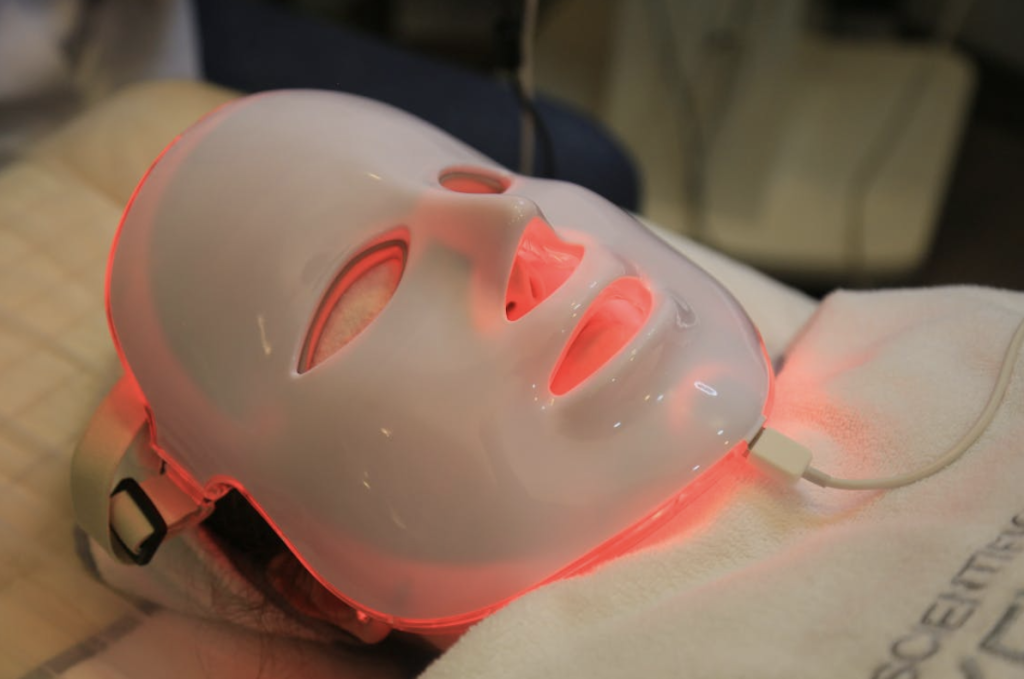
While “LED masks” are everywhere, the industry has been transformed by medical-grade LED technology beyond a red mask you wear at home. Professional systems use specific, high-output wavelengths (usually 633nm for red and 830nm for near-infrared) that are clinically proven to boost mitochondrial function. This isn’t just “shining a light”; it’s photobiomodulation, where light energy is converted into cellular fuel (ATP), accelerating repair and reducing systemic inflammation.
They can do this for all colours that target a range of issues and concerns include red, blue, green and yellow. These all have their own benefits and applications, which are all important for overall skin health.
Microcurrent and EMS (Electrical Muscle Stimulation)
If lasers treat the “skin,” microcurrent treats the “scaffold.” Tech like the latest EMS devices sends low-level electrical currents that mimic the body’s natural signals. This “gym for the face” re-educates the facial muscles, lifting the brows and sharpening the jawline. In 2026, these devices have become more sophisticated, featuring sensors that adjust the current based on the skin’s resistance in real-time.
Biotech-Driven “Signal Peptides”
Skincare technology isn’t just hardware; it’s the “software” inside the bottle. We have entered the era of Biotechnology in Skincare, where ingredients are bio-fermented or lab-grown to be 100% bio-identical to human skin. The most transformative are Signal Peptides, which act as “messengers” telling your skin cells to act younger, produce more filaggrin (a key barrier protein), and defend against environmental pollutants.
PDRN (Salmon DNA) and Exosome Therapy
The biggest clinical shift in the last two years has been the move toward biostimulators. PDRN (polydeoxyribonucleotide) fragments and Exosomes (cellular messengers) are now being used alongside microneedling and laser treatments. This tech doesn’t just “hydrate”; it provides the actual DNA building blocks and signalling instructions for damaged cells to repair themselves. This is the bridge between traditional beauty and regenerative medicine.
Thermal and Cryogenic “Shock” Tech
The industry has mastered the use of temperature extremes. Thermal technology (Radiofrequency) and Cryogenic technology (Cold-therapy) are now used in tandem to shock the skin into a state of renewal. Modern devices can oscillate between extreme heat (to stimulate collagen) and sub-zero cold (to reduce inflammation and tighten pores) in a single session, a process known as “thermal shock” that dramatically improves skin elasticity.
Ultrasound Skin Remodelling (HIFU)
Rounding out the top ten is High-Intensity Focused Ultrasound (HIFU). This technology allows for the most “surgical” results without an incision. By focusing ultrasound energy at the SMAS layer (the same layer of tissue that surgeons manipulate during a facelift), HIFU creates “thermal coagulation points.” As these points heal, they pull the entire structure of the face tighter, offering a lifted appearance that can last for over a year.
The New Era of Skincare
The transformation of the skincare industry is rooted in a shift from masking to managing. We no longer just cover up a dull complexion; we use the SkinPen to rebuild it, Zaffiro to lift it, and Limelight to clarify it.
The most important takeaway for 2026? Medical-grade technology is now accessible, safe, and highly predictable. The future of your skin isn’t in a jar; it’s in the science.
Overall, there have been so many contributions to skincare and skin conditions over the past couple of years, and if you think it’s just stopping here, you are completely wrong. There is constant research going into new ways to evolve and improve the method of healing, anti-ageing and improve our skin.