
The Reality of Multi-Platform Short-Form Video
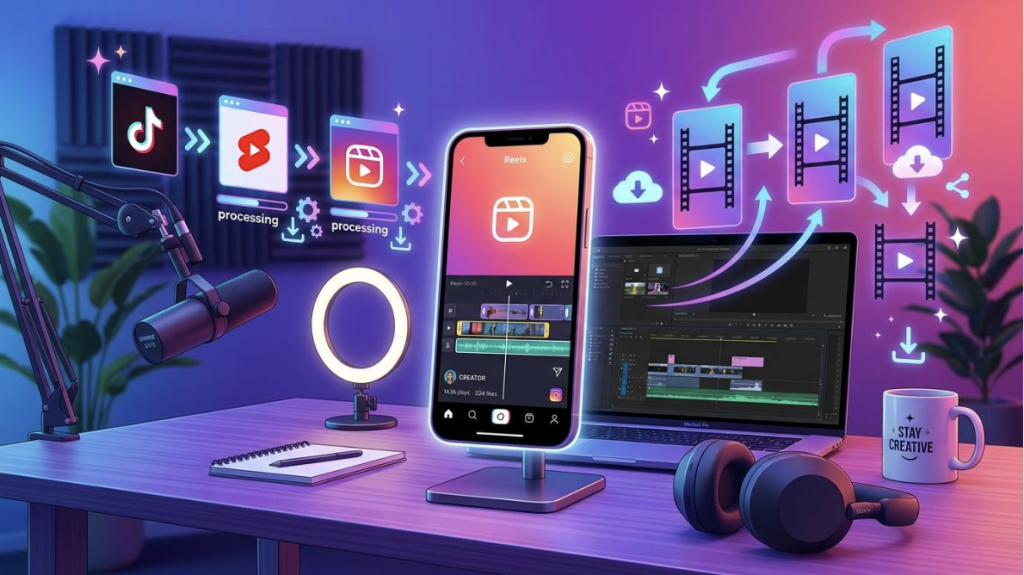
In the modern digital landscape, short-form vertical video is no longer just an experiment for top-of-funnel discovery—it is the primary driver of organic brand growth across consumer and B2B segments alike. Whether your target demographic scrolls through Instagram Reels on their evening commute, searches TikTok for product solutions, or consumes YouTube Shorts during work breaks, high-velocity 9:16 video dominates digital attention.
However, producing bespoke, studio-grade video assets from scratch for every single network is completely unsustainable for most content teams. Between scripting, filming, multi-track audio editing, color grading, and copy testing, creative burnout quickly stifles distribution frequency. High-performing creators and digital agencies solve this bottleneck not by producing four times as many individual clips, but by building a frictionless, lossless cross-platform repurposing engine.
The Compression Trap: Why Screen Recording Destroys Your Organic Reach
When marketing teams attempt to repurpose short-form assets, they frequently rely on convenient shortcuts: recording their smartphone screens or saving videos directly through in-app export buttons. Unfortunately, these shortcuts trigger severe algorithmic and quality penalties.
First, recommendation algorithms on Instagram, TikTok, and YouTube Shorts actively penalize videos bearing competing platform watermarks or visual UI overlays. When an algorithm scans an incoming upload and identifies a competitor logo stamped in the corner, distribution reach is throttled immediately. Second, screen recording captures video at unpredictable frame rates, introduces audio latency, and degrades pristine 1080p footage into pixelated, artifact-ridden mush.
To preserve algorithmic favor and maintain crisp visual clarity, production workflows must start with clean, uncompressed source files. Leveraging a reliable Instagram Reels downloader enables social media managers and creators to save public MP4 clips directly in their original high-definition resolution with perfectly synchronized stereo audio. By working directly with pure master files instead of compromised screen recordings, you retain full editorial control over your visual assets.
Building an Agile 4-Step Repurposing Pipeline
A scalable repurposing framework does not mean blasting identical files blindly across every social network. High-converting distribution requires adapting each asset to match native viewing patterns while conserving production time:
- 1. Establish Your Anchor Channel: Select a single primary network (typically Instagram Reels or TikTok) where your creative team tests initial hooks, narrative pacing, and audience retention metrics. Let real audience feedback validate which clips deserve wider syndication.
- 2. Clean Source Extraction: Extract the high-resolution master video file without watermarks or compressed audio tracks. Clean source files allow seamless re-editing and prevent multi-generation compression loss.
- 3. Respect Platform Safe Zones: Instagram, YouTube Shorts, and TikTok each position their like counters, comment trays, profile badges, and caption zones in distinct screen quadrants. Ensure essential graphics, closed captions, and product close-ups reside safely inside the central 9:16 viewport to prevent critical information from being blocked by app interfaces.
- 4. Contextualize Captions and Trending Audio: Never copy and paste generic descriptions across networks. Reframe your title and hook to align with each platform’s distinct search intent—instructional search for YouTube Shorts, cultural buzz for TikTok, and visual lifestyle hooks for Instagram.
To accelerate this pipeline, creators utilize browser-first utilities like the HD Reels Downloader platform. Because it operates directly inside any modern desktop or mobile browser without requiring software installations or account registrations, marketing teams can seamlessly grab their source content on iPhone, Android, or Mac workstations in seconds.
Technical Considerations: Codecs, Audio Sync, and Metadata
Maintaining top-tier playback quality across different social ecosystems requires strict adherence to vertical video specifications. Your master video exports should adhere to standard H.264/AAC encoding wrapped in an MP4 container, with a target resolution of 1080 × 1920 pixels running at 30 or 60 frames per second.
Audio alignment is equally vital. Algorithmic retention curves drop dramatically within the first 1.5 seconds if viewer-perceived audio drifts even slightly out of synchronization with lip movements or visual cues. Keeping master audio channels intact during the download and re-export cycle ensures that viewer retention signals remain strong, protecting your watch time across competitive discovery algorithms.
Conclusion:
The creators and brands winning in 2026 are not burning out by filming twelve different videos every week. Instead, they invest their creative energy into crafting two or three exceptional pieces of short-form storytelling, then deploy an automated, clean repurposing protocol to multiply their reach across all major vertical feeds.
By stripping away competitor watermarks, respecting platform safe zones, and utilizing web-native media tools to preserve pure source quality, you turn every single video into a high-converting, multi-channel distribution engine.